
Find People Through Coachella Records
Coachella people search work usually starts outside city hall. The City Clerk is the right door for city minutes, ordinances, contracts, public comments, permits, and other municipal files. Most identity-bearing records sit with Riverside County or California agencies. The county recorder keeps deed and clerk indexes. The assessor, tax collector, and GIS tools connect parcels with addresses. Riverside Superior Court handles civil, criminal, family, probate, and traffic cases. State tools add business filings, licenses, custody searches, privacy programs, and voter-record rules.
Choose the route by the clue. A name fits the recorder index, court portal, license databases, and school or agency directories. A street address fits assessor, tax, GIS, building, code, and service-request records. A family-history clue often needs vital records, probate, obituaries, old newspapers, and regional archives. A Coachella search can also involve Thermal, Indio, Mecca, Palm Desert, and countywide systems because many schools, courts, libraries, and newspapers serve the valley rather than one city boundary.
- Search the Riverside County recorder index by party name when the clue may involve deeds, liens, marriage records, or clerk documents.
- Use Riverside Superior Court Public Access for case-number work and paid name searches when civil, probate, family, criminal, or traffic matters are likely.
- Start with assessor, tax, RivCoView, or GIS tools when the known clue is a Coachella address, APN, or PIN.
- Use vital-record offices, newspapers, probate files, and archives for family history, death, marriage, or heir research.
- File a California Public Records Act request with the city or county custodian when the record exists but no public index was found.
Coachella People Search Offices
The same person may appear in several offices for different reasons. The Riverside County Assessor-County Clerk-Recorder is the largest hub because it combines recorder, clerk, and assessment functions. Riverside Superior Court adds party-name and case-number records. The City Clerk handles Coachella municipal records and routes public-record requests through NextRequest. For the record-by-record access rules, fees, and request steps, use the Coachella public records page.
Riverside Superior Court
Public Access portal and records request
$15 court-run search
Coachella Recorder Name Search
The Riverside County recorder index is the strongest official name directory for land and clerk-record trails. Searchers can use name, document number, document type, map book/page, or advanced fields. Individual names should be entered as last name, first name, and middle initial when known. A broader search can use a last name and first initial. Organization names should be entered as spelled. Recorder documents are indexed online from Jan. 1, 1974 through July 8, 2026, while clerk documents are indexed from Jan. 1, 1893 through May 29, 2026.
The Riverside recorder name search shows the core fields used for Coachella deeds, liens, maps, and clerk documents.
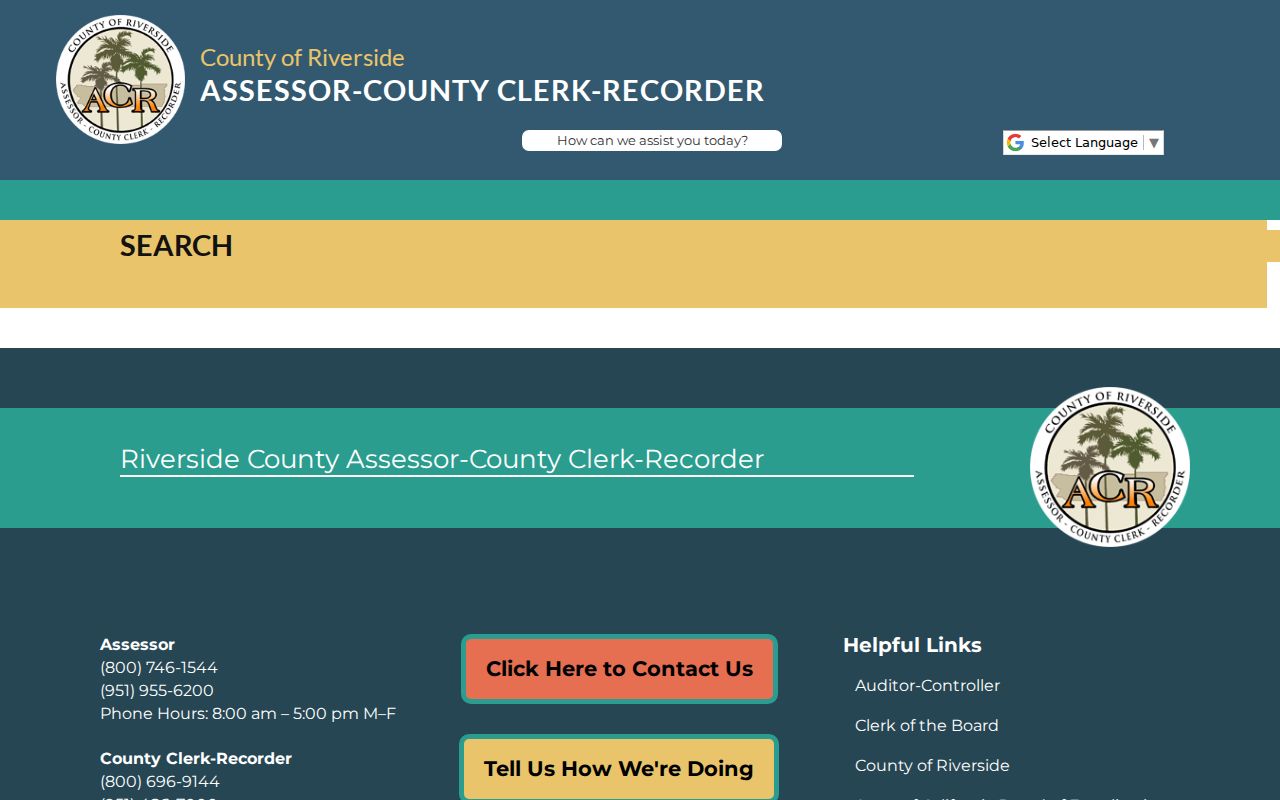
That portal is useful because a party name can lead to a document number, recording date, and parcel clue before any copy is ordered.
| Search Field | Use in Coachella Search | Format Note |
|---|---|---|
| Name | Grantor, grantee, clerk-document party, or business name | Use Last First MI for people. |
| Recording dates | Narrows a deed, lien, or release window | Start and end dates are optional. |
| Document type | Limits results to deeds, liens, maps, or other categories | Use with a date range when names are common. |
| Document number | Finds a known instrument | Format is shown as YYYY-000001. |
Note: The advanced search supports wildcard, sound-alike, fuzzy, and proximity operators for spelling variation in Coachella surnames.
Coachella Property Search Clues
Property records give a practical path from an old address to a present record trail. Riverside Assessor Online Services searches by APN, PIN, or property address. RivCoView uses PIN/APN or address and expects the first nine digits with no dashes. Assessor maps show parcel numbers, lot boundaries, dimensions, acreage, street widths, adjoining parcels, and recorded map data. They do not show street addresses or ownership, so the map is the key, not the full answer.
The Riverside ACR search hub points Coachella users toward the assessor, recorder, and clerk-recorder systems from one county page.
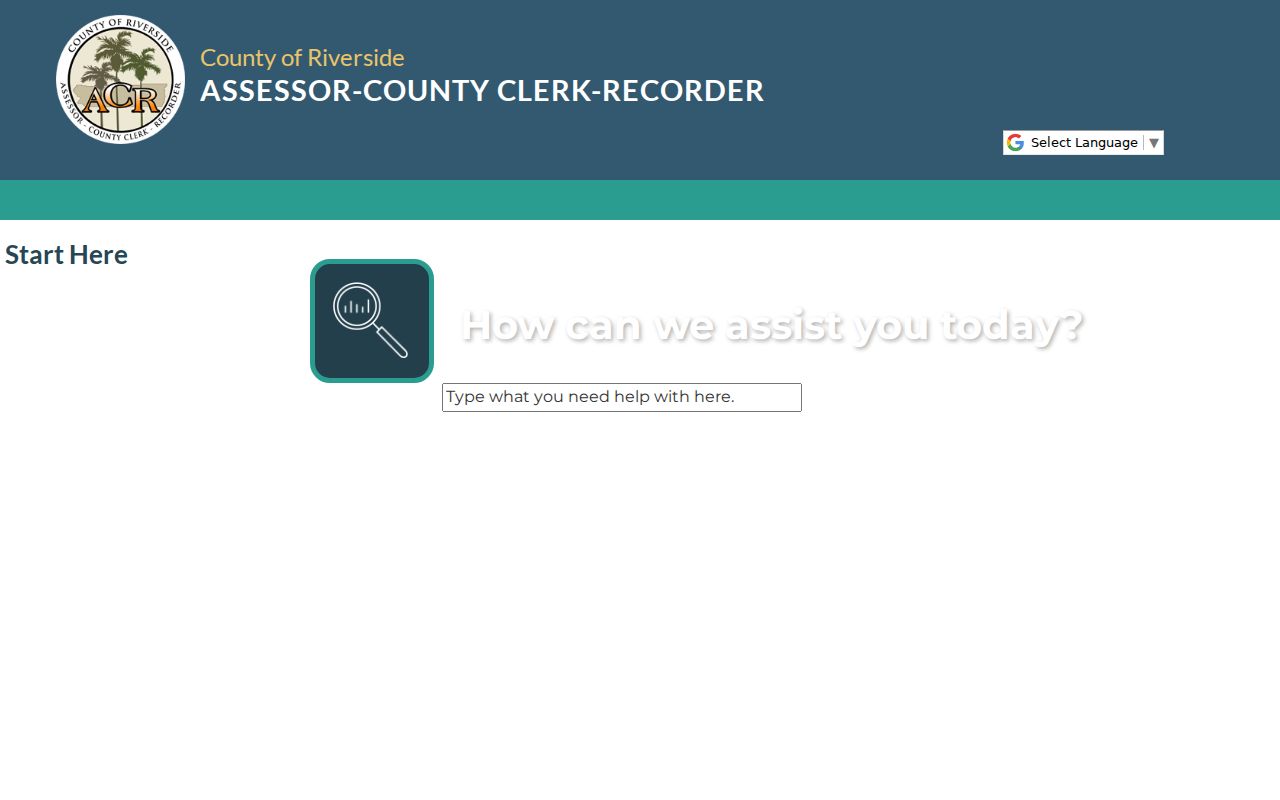
Use the county hub when one clue can move between property, deed, and clerk-record systems.
Parcel path. Address to APN, APN to recorder document, document to party name, and party name to prior records is the cleanest Coachella property workflow.
Coachella City Hall Records
City records matter when the person or address touched municipal business. The City Clerk keeps certified minutes, ordinances, resolutions, municipal code records, official city documents, agreements, contracts, and public-document workflows. Coachella also has address-heavy records in Building and Safety, Code Enforcement, and Fix It service requests. Building inspection requests require an applicant name, address, building permit number, phone number, and inspection type, but no public permit lookup was found in the official city pages reviewed.
The city directs public-record requests to Coachella NextRequest, where requesters can submit and track California Public Records Act requests.
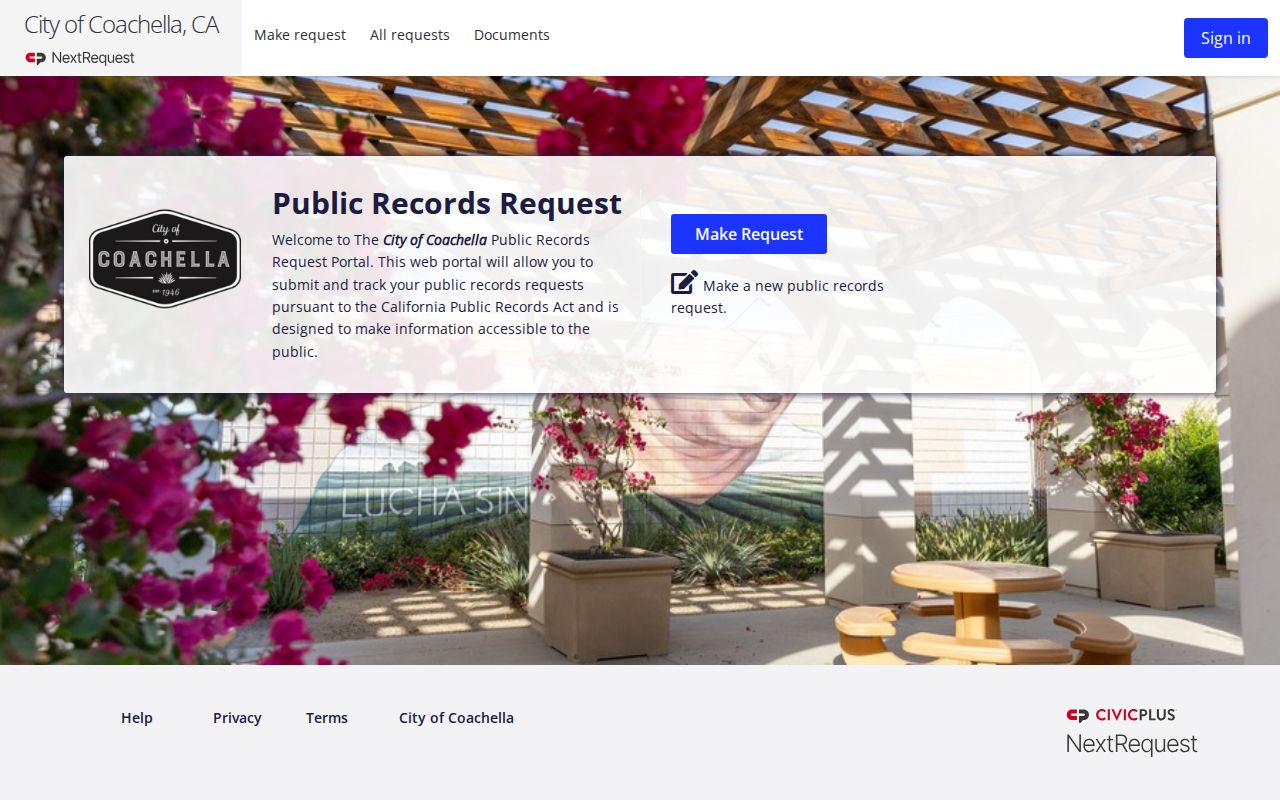
Use the city path for municipal files, not county deeds, county court cases, or state records.
Coachella Court Name Lookup
Coachella court records flow through the Superior Court of California, County of Riverside. Public Access can show available case data, but the court states that online information is not the official record. An account is required. Case-number searches are free when the user has the needed case number. Name searches use paid credits. A register of actions, often called an ROA, lists documents filed in a case, dates filed, and the party who filed them.
Coverage differs by division. Probate is mostly available from July 1994 onward, family law from April 1992 onward, and criminal or traffic coverage varies by courthouse and case type. Juvenile, adoption, sealed, expunged, and confidential records are not ordinary online search results. When the portal is not enough, the court-run Records Search Request portal takes case type, date range, courthouse clues, party names, aliases, and a search description.
| Coachella Court Route | Covers | Name Search | Access |
|---|---|---|---|
| Riverside Superior Court Public Access | Civil, criminal, family, probate, traffic | Paid name credits | Account required; case-number search free. |
| Records Search Request | Court-run search request | Court staff searches from supplied facts | $15 per name or search. |
| PACER and Central District | Federal cases | Federal party and docket search | Separate federal account and fees. |
Coachella Vital Record Paths
Vital records are split by record type and timing. Riverside University Health System-Public Health handles current and prior-year births, deaths, and fetal deaths that occur in the county. The Riverside County Clerk-Recorder maintains permanent county birth, death, and marriage records from 1893 forward once those records reach the office. CDPH-VR is the statewide custodian for certified copies and amendments. Divorce decrees are court records, while CDPH can issue only a Certificate of Record for divorces filed from 1962 through June 1984.
California separates authorized and informational copies. Authorized copies are limited by Health and Safety Code sections 103525 through 103526.5. Informational copies are not valid for identity. Confidential marriage records are limited to the parties or a court order. For family history, the better trail may be county marriage records, obituaries, probate, cemetery records, and newspapers rather than a modern certified-copy order.
Coachella Valley Search History
Coachella incorporated on Dec. 13, 1946, but the town history reaches back to 1898. Earlier people records are often not city records at all. They may be county deeds, assessment rolls, school records, water district files, church records, newspapers, or regional archives. Riverside County was formed in 1893, which is why many county vital, clerk, archive, and recorder materials start that year.
The Coachella Valley History Museum Archives in Indio holds regional newspapers, magazines, business licenses, photographs, documents, and records spanning more than 100 years of valley history. Riverside County Archives adds assessment rolls, deeds, official records, property ownership records, maps, and Board of Supervisors materials. CDNC’s Desert Sun archive covers Dec. 14, 1934 through April 30, 1993, with 12,622 digitized issues.
- Grantor and grantee
- The person or entity giving or receiving an interest in a recorded document.
- Docket or register of actions
- A court list of filings, dates, and parties in a case.
- Decedent
- A deceased person named in probate, death, or estate records.
- APN or PIN
- A county parcel identifier used to move from address clues to property records.
Coachella Records That Stay Hidden
Some official systems help with a Coachella people search only when the law allows it. California voter registration information is not open public data. My Voter Status is for a voter checking their own record, and the voter file is released only through an approved Secretary of State application. Safe at Home can shield a true residence address through a substitute mailing address. Confidential voters, protected addresses, driver license numbers, Social Security number fragments, voter signatures, adoption records, juvenile cases, sealed cases, and confidential marriages are not ordinary public search results.
Lawful personal use only. Coachella records should be used for family history, reconnecting, property curiosity, civic transparency, fraud prevention, and personal safety, never to stalk or harass anyone.
Coachella License and Business Search
California state databases add another official layer to a Coachella people search. The Secretary of State bizfile Online search covers business entities, UCC filings, trademarks, immigration consultants, and certified-copy verification. A business entity record can connect a name with an entity, agent, address, status, or filing history when those fields are shown. UCC records can be searched by debtor, secured party, or file number. The active notary listing is a downloadable Secretary of State directory updated each business day, with notary name, business name if any, mailing address, filing county code, commission number, and expiration date.
Professional license lookups are split across DCA and board systems. DCA License Search uses board or bureau, license type, license number, business name, first name, last name, and registry number. Board-specific tools add contractor, real estate, attorney, medical, nursing, and teacher-credential searches. These are useful when a Coachella name is tied to a trade, practice, commission, or public credential, but they should be read as licensing records, not complete personal profiles.
| Lookup | Search Fields | People-Search Value |
|---|---|---|
| SOS bizfile | Entity name or filing-style search | Business status, filing history, agent or address clues. |
| SOS UCC | Debtor, secured party, file number | Financing-statement parties and addresses. |
| DCA License Search | Board, license type, number, business, first, last | License status and discipline where disclosed. |
| CSLB, DRE, State Bar | Name, number, company, or board-specific fields | Contractor, real estate, and attorney profiles. |
Coachella Custody Record Lookups
Custody and registry tools are narrow, but they can answer specific identity questions. The Riverside County Sheriff Inmate Information System requires last name and also offers first name and date of birth. Visible result fields include booking number, name, sex, race, date of birth, age, physical descriptors, arrest date and time, arresting agency, arrest location, booked date and time, case number, bail, current facility, custody unit, next court date, court name, release date, charges, disposition, and booking type. The system warns that the information should not be relied on for legal action.
State custody uses CDCR CIRIS, which CA.gov describes as showing name, CDCR number, age, current location, commitment counties, admission date, and parole hearing data for current CDCR custody. Federal custody uses the Bureau of Prisons locator for federal inmates from 1982 forward. California DOJ Megan's Law shows only statutorily disclosable registrants, is updated daily by law enforcement, and may omit some registrants or contain errors. These lookups should be used with caution and confirmed with the responsible agency.
Coachella Unclaimed Property Search
The California State Controller's ClaimIt search is another official name index that can help with heir and family-history research. It requires a last name or business name, with first name optional. A match may point to an old address, business name, or estate clue, and claims require proof rather than a simple online confirmation. The research file identifies the State Controller search as free to claim, which is important because fee-demand letters and private recovery offers can confuse people who are trying to verify a legitimate state-held property record.
Use unclaimed property after checking death records, probate, obituaries, deeds, and business filings. It is strongest when the goal is to reconnect property or funds with an owner or heir. It is weak as a stand-alone locator because not every person has a claim, and a match needs official proof before the state releases anything.
Coachella Record Fee Warnings
Riverside County ACR posted a March 25, 2026 warning about notices asking property owners to pay for property records. The county reminds residents to verify notices before paying and to order official copies directly from the county when a recorder copy is needed. Riverside also sends courtesy notices when deeds, deeds of trust, or similar documents are recorded, and foreclosure advisory letters after notices of default. These notices help owners spot forged deeds, title transfers, and advance-fee schemes.
For another clue source, the Census QuickFacts page for Coachella gives local context such as population and economic data.
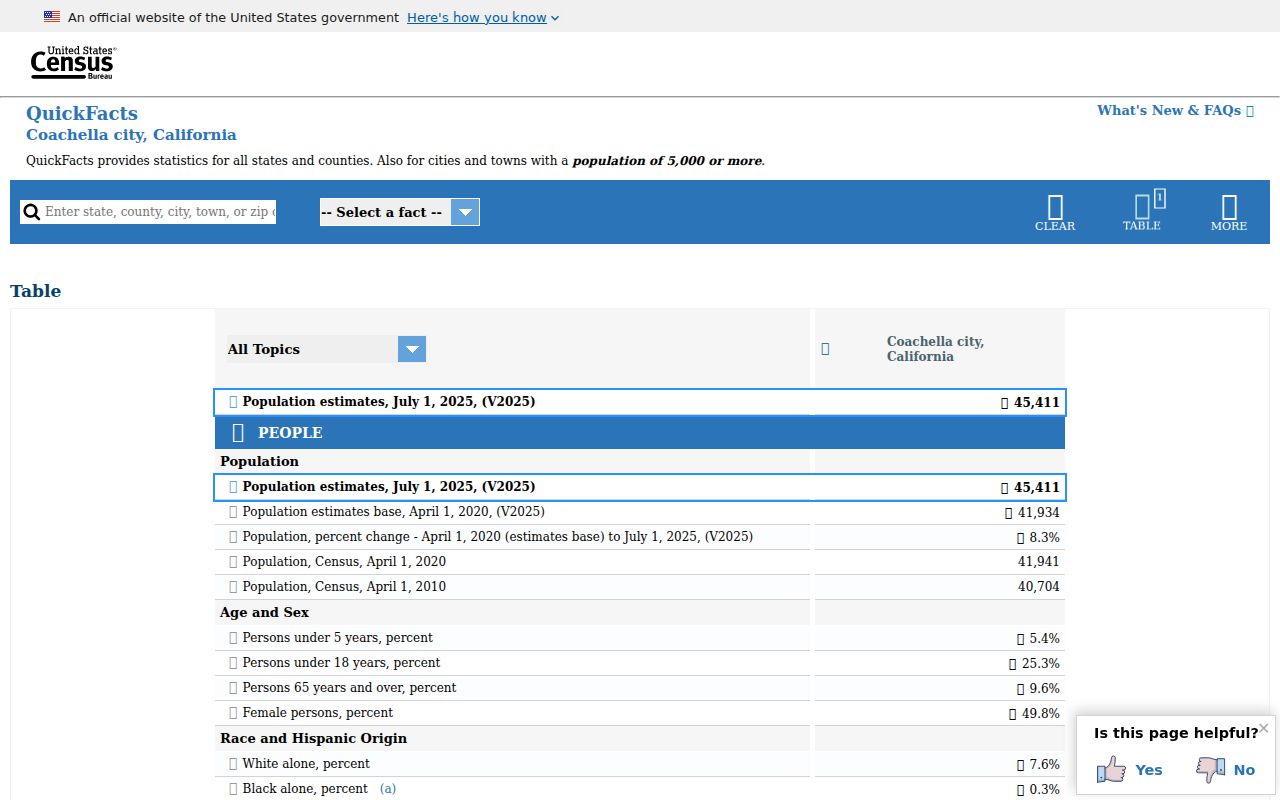
Context pages do not identify one person, but they help explain why records may connect city, valley, county, school, and business systems.